
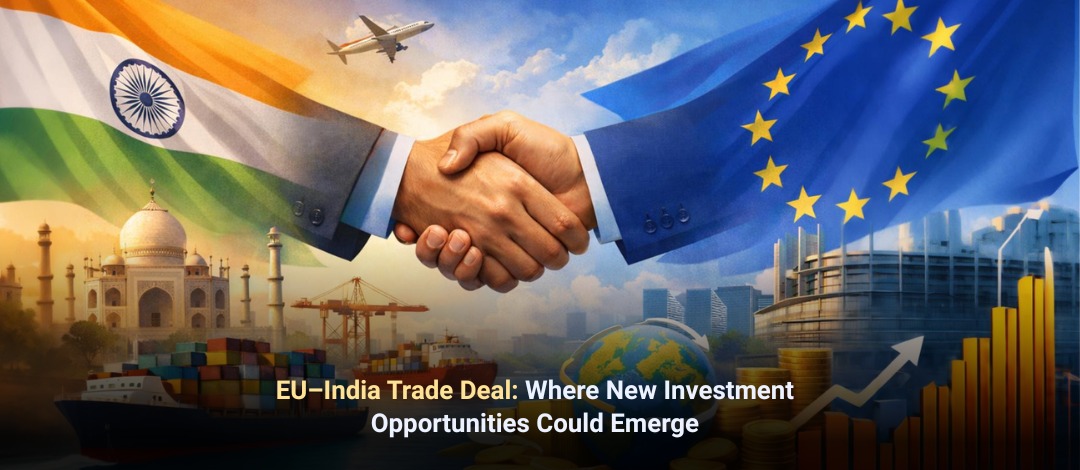


WHY IS EVERYONE TALKING ABOUT THIS DEAL?
Imagine finally getting easy access to one of the richest markets in the world - after waiting nearly 20 years.
That’s what happened when India and the European Union announced they had concluded negotiations for a Free Trade Agreement (FTA) on January 27, 2026, during the India–EU Summit in New Delhi.
The EU includes 27 countries and over 450 million consumers. Together with India, this deal connects nearly 2 billion people.
That’s why leaders are calling it the “Mother of All Deals.”
First things first: Is the deal active right now?
Not yet.
Here’s the simple status:
• The deal is agreed in principle
• Legal checks and approvals are still pending
• It is expected to come into force in late 2026 or early 2027
• Benefits will roll out slowly over several years
So nothing changes at customs today -but Indian businesses and markets watchers are already preparing.
WHAT’S ACTUALLY IN THE DEAL?
1️⃣ Indian goods become cheaper in Europe
Europe currently charges extra taxes on many Indian products.
Under the deal:
• Most Indian exports will face zero or very low tariffs
• This includes textiles, pharma, gems & jewellery, leather goods, seafood, and auto components
What this means for India:
Indian exporters can sell more competitively in Europe → more orders → more jobs.
2️⃣ Some European goods become cheaper in India
India has agreed to reduce taxes on selected European imports over time, such as:
• Cars (within a limited quota)
• Wine, beer, and spirits
• Olive oil, chocolates, pasta
• Machinery and chemicals
What this means for consumers:
More choices and lower prices over time, not immediately.
3️⃣ Services matter too
This deal also covers services, like:
• IT and software
• Consulting and professional services
It includes provisions that make it easier for Indian professionals to work temporarily in Europe.
What this means:
Good news for India’s IT and services sector - more projects and global exposure.
4️⃣ Easier exporting rules
To get tariff benefits, exporters must prove their products are made in India called rules of origin.
The deal simplifies these rules - but documentation is still required.
What this means:
Large exporters benefit faster, while Indian SMEs need preparation.
5️⃣ Climate and sustainability focus
The deal includes cooperation on:
• Clean energy
• Green manufacturing
• Sustainability standards
The EU has also committed funds to support India’s green transition.
What this means:
Opportunities for renewable energy, EVs, and green-tech companies.
6️⃣ Sensitive sectors are protected
India protected key areas like:
• Dairy
• Rice and cereals
• Poultry
• Certain farm products
Why this matters:
Indian farmers and small producers are not suddenly exposed to European competition.

WHO BENEFITS - AND WHO MAY FEEL PRESSURE?
LIKELY WINNERS
• Textiles & apparel
• Pharmaceuticals
• IT & services
• Gems & jewellery
• Seafood and leather
• Auto components
• Green energy
These sectors export more and gain better access to Europe.
SECTORS UNDER PRESSURE
• Capital goods and machinery makers (due to cheaper EU imports)
• Alcohol and beverage companies
• Small exporters who struggle with EU quality standards
This deal rewards scale, quality, and compliance.
WHAT DOES THIS MEAN FOR INDIAN MARKETS?
Markets reacted positively after the announcement, but this is important:
This is a long-term story, not a quick trading trigger.
WHAT INVESTORS ARE WATCHING:
• Export-focused companies
• IT and pharma firms
• Manufacturing linked to global supply chains
Actual earnings impact will likely begin from 2027 onward.
WHAT ABOUT THE RUPEE?
More exports can help - but imports may also rise.
Currency movement depends on many factors, so no straight-line conclusions.
WHAT CHANGES FOR EVERYDAY INDIANS?
Consumers
• European goods may become cheaper over time
• More premium brands may enter India
• Better quality due to competition
Small businesses
• New export opportunities
• Higher compliance and paperwork
• Those who prepare early benefit more
Market watchers
• This deal reshapes India’s trade direction
• Helps reduce dependence on the US
• Impact spreads over 5–10 years
Timeline
• Jan 27, 2026: Deal announced
• 2026: Legal review and approvals
• Late 2026 / Early 2027: Deal becomes active
• 2027 onwards: Tariff cuts and benefits roll out in phases
Risks to keep in mind
• EU quality and sustainability standards are strict
• Compliance costs may hurt small exporters
• Political delays in EU approvals are possible
• Benefits may arrive slower than expected
Scenarios:
• Best case: Strong export growth, job creation
• Base case: Gradual benefits, mixed sector impact
• Watch-outs: Delays and higher costs for SMEs
FINAL TAKEAWAY
The EU–India “Mother of All Deals” won’t change your life tomorrow - but it quietly reshapes India’s economic future.
If exports grow, jobs increase, and competition improves quality, this deal could matter to every Indian household over the next decade.
Slow deal. Big impact. Long runway.
Disclaimer
What's Trending
Recent Blog


.jpeg)

Blog
Recent Blogs




Open your GoPocket Account within 5 minutes.
Have any queries?
Get support

Investing and trading is made simple, affordable and accessible for every Indian.



© Made with ❤️ in Coimbatore, India | Copyright © 2023 onwards, GoPocket.