
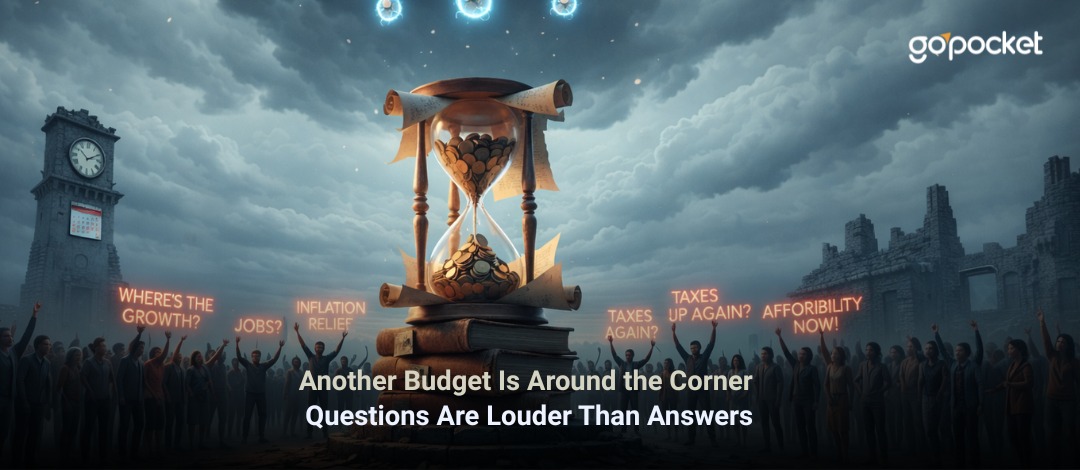


As February 1, 2026, gets closer, the mood begins to change.
Newsrooms get busy. Markets slow down. Every day, conversations start circling one topic again-the Union Budget 2026.
This happens every year.
There is excitement, hope, and also a sense of uncertainty. Before anything is announced, one thing is clear: there are more questions than answers.
WHY EVERYONE WATCHES THE UNION BUDGET
The Union Budget is not just about numbers.
It is the government’s way of saying what matters most in the year ahead.
It gives clues about where money may be spent, how taxes might change, and which areas of the economy could get attention. It also shows how the government plans to balance growth with financial discipline.
For those trying to understand how the Budget actually works—its structure, income sources, and spending-the GoPocket guide “Union Budget Explained: A Simple Guide for Beginners” breaks it down in an easy-to-follow manner, especially for first-time readers.
But the real meaning of a Budget is rarely understood on Day One. Reactions are quick, but clarity comes slowly.
WHAT PAST BUDGETS QUIETLY TELL US
Looking back, one pattern stands out.
Every Budget reflects its time.
Some years focused on boosting growth.
Other years prioritised stability and control.
At times, long-term development and infrastructure spending Budget 2026 themes took centre stage
Budgets are not one-time events. They are part of a long journey. Each one builds on earlier decisions and sets the tone for what comes next. This bigger picture is often missed in short-term debates.
WHY EXPECTATIONS RISE, BUT ANSWERS DON’T COME EARLY
As Budget Day approaches, curiosity grows. People start wondering:
• Will taxes become simpler?
• Will growth-focused spending continue?
• Can development and fiscal discipline go together?
These are natural questions. But at this stage, they are only possibilities, not promises. Watching carefully makes more sense than guessing outcomes.
WHY BUDGET DAY IS ONLY THE BEGINNING
One important thing is often forgotten.
The Budget is announced in one day, but its impact plays out over months and even years.
Policies take time to be implemented. Results appear slowly. The real direction of the economy becomes clear only after actions follow words.
That is why first reactions-especially in markets- rarely tell the full story.

SPECIAL REPORT – PRE-BUDGET COVERAGE
WHAT IS EXPECTED THIS YEAR
SPENDING AND GROWTH
Markets expect the government to continue focusing on growth through spending on:
• Infrastructure, railways, and logistics
• Defence and manufacturing incentives
• Renewable energy and electric vehicles
• Housing and urban development
Support for small businesses (MSMEs), digital systems, and transport efficiency is also expected. Rural development, agriculture, and healthcare may see steady but careful increases,shaping overall budget expectations 2026.
TAX EXPECTATIONS
• Long-term capital gains (LTCG): Some simplification or relief is expected
• Short-term capital gains (STCG): No major change likely
• Income tax: People are hoping for higher exemptions, easier slabs, and better relief for salaried individuals
The idea is simple: More money in hand could mean more spending and better confidence.
HOW MARKETS MAY REACT
Markets are entering Budget week with cautious optimism. Most expectations point toward continuity rather than surprises,a key theme in every Union Budget preview 2026.
IF THE BUDGET FEELS POSITIVE
• Growth support and tax clarity could lift sentiment
• Nifty may rise by 300 to 800 points
• Banking, infrastructure, and consumer sectors may lead
IF THE BUDGET DISAPPOINTS
• Weak signals on spending or taxes could cause concern
• Nifty may fall by 400 to 700 points
• Bigger declines are unlikely unless global conditions worsen
Over time, markets will focus more on growth, earnings, and execution than on headlines short-term budget impact on stock market reactions.
HOW DIFFERENT INDUSTRIES ARE PREPARING
BANKING
More credit demand from infrastructure and small businesses. Any support for public sector banks will matter.
AUTO
Focus on electric vehicles, charging stations, and rural demand.
ENERGY
Strong push expected toward renewables, green energy, and power infrastructure.
FINANCE (NBFCS)
Liquidity support and stable rules for lending to MSMEs and consumers.
FMCG
Tax relief and rural spending could help boost everyday consumption.
IT
Limited direct impact, but long-term support for digital growth and innovation.
MEDIA
Advertising recovery is linked to overall consumption and digital growth.
METALS
Infrastructure spending and clarity on mining policies.
PHARMA
Higher healthcare spending and support for domestic manufacturing.
PSU BANKS
Balance-sheet strength, credit growth, and stability.
REAL ESTATE
Affordable housing incentives and home-loan benefits.
WHY PERSPECTIVE MATTERS DURING BUDGET SEASON
Budget time can feel loud and confusing. Opinions come fast. Reactions differ widely.
But one Budget does not change financial outcomes overnight. Long-term financial health depends more on consistency, discipline, and patience than on one announcement.
As February 1 Nears, A Calm Approach Helps
It may help to slow down.
To listen carefully.
To wait before reacting.
Questions will remain. Answers will come-step by step.
FINAL THOUGHT
Budgets guide direction, not destiny. As the country waits for the Union Budget on February 1, 2026, keeping a long-term view often matters more than reacting to day-one headlines.
Because once the noise fades, understanding lasts longer.
Disclaimer:
This content is for educational purposes only and not investment advice. Market scenarios are expectations, not guarantees.
Disclaimer
What's Trending
“Silver: The Hidden Gem of Investment You Can’t Ignore!”
September 26, 2025
Recent Blog


.jpeg)

Blog
Recent Blogs





Open your GoPocket Account within 5 minutes.
Have any queries?
Get support

Investing and trading is made simple, affordable and accessible for every Indian.



© Made with ❤️ in Coimbatore, India | Copyright © 2023 onwards, GoPocket.