
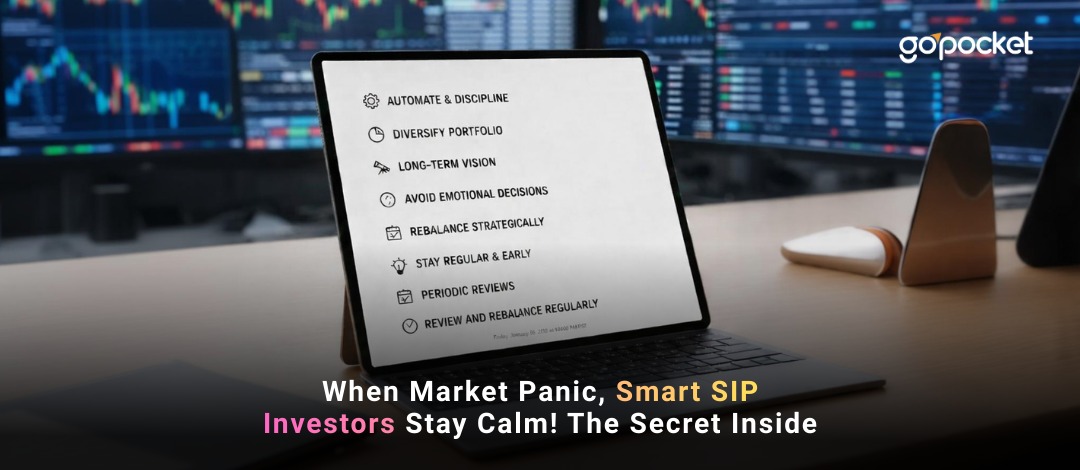


Market volatility is scary, especially when red numbers flash on screens and headlines predict uncertainty. Many investors panic, pause their SIPs, or stop investing entirely.
But here’s the truth:
Volatility doesn’t destroy wealth. Emotional decisions do.
Smart investors understand that market ups and downs are not enemies; they are opportunities in disguise. And Systematic Investment Plans (SIPs) remain one of the most powerful tools to stay disciplined, consistent, and confident during uncertain times.
Let’s break down the most effective SIP strategies to help investors stay strong even when markets feel unstable
WHY STOPPING SIP DURING MARKET FALLS CAN HURT LONG-TERM WEALTH
When markets fall, fear takes over. Many investors feel the urge to stop investing, assuming it will protect their money.
But stopping SIPs during market dips can backfire:
• You miss the chance to buy units cheaper
• You break investment discipline
• You slow down compounding growth
• You often re-enter after markets recover, losing opportunity
History shows that investors who stay invested during downturns often benefit more when markets bounce back.
STRATEGY 1: LET RUPEE COST AVERAGING WORK IN YOUR FAVOR
SIPs automatically follow a powerful principle called rupee cost averaging.
When markets fall → your SIP buys more units
When markets rise → your SIP buys fewer units
Over time, this helps reduce your average cost and smooth out market volatility without needing to time the market.
Simple rule:
Keep investing. Let time do the heavy lifting.

STRATEGY 2: STEP-UP SIP INCREASE INVESTMENTS AS INCOME GROWS
A Step-Up SIP lets you increase your SIP amount every year, aligned with salary hikes or business growth.
Why this works in volatile markets:
• You invest more during dips
• Your long-term corpus grows faster
• You build wealth without feeling financial pressure
Even a 10–15% yearly step-up can significantly increase long-term returns.
STRATEGY 3: VALUE AVERAGING SIP INVEST MORE WHEN MARKETS FALL
A Value Averaging SIP adjusts your investment amount based on portfolio performance.
If portfolio value drops → you invest more
If the portfolio grows faster → you invest less
This method can help buy more during market corrections, but it requires:
• Active tracking
• Discipline
• Clear financial planning
Best suited for investors who are comfortable monitoring portfolios closely.
STRATEGY 4: TACTICAL SIP TOP-UPS DURING HIGH VOLATILITY
Periods of high volatility (measured using India VIX) often create market dips.
Some experienced investors choose to:
• Add extra money temporarily
• Increase SIPs during market corrections
This can help accumulate more units at lower prices, but it should only be done if your risk tolerance and cash flow allow it.
STRATEGY 5: COMBINE SIP WITH STP FOR SMARTER MARKET ENTRY
A Systematic Transfer Plan (STP) allows investors to:
• Park lump-sum money in debt funds
• Gradually transfer it into equity funds
This strategy:
• Reduces timing risk
• Keeps idle money productive
• Smoothens equity exposure in volatile markets
SIP + STP = disciplined investing with lower emotional stress.
STRATEGY 6: DON’T PAUSE SIP DATA SHOWS STAYING INVESTED OFTEN HELPS
Many investors pause SIPs during market downturns, but long-term data shows this can reduce potential gains.
Investors who continue SIPs during market falls:
• Accumulate more units
• Benefit from eventual market recovery
• Strengthen compounding impact
While markets may fluctuate in the short term, long-term discipline often wins
STRATEGY 7: REBALANCE YOUR PORTFOLIO ONCE A YEAR
Volatility can change your asset allocation.
For example:
• Equity rallies may increase risk exposure
• Market falls may reduce equity weight
Annual portfolio rebalancing helps:
• Maintain your risk level
• Lock profits
• Keep investments aligned with your financial goals
This keeps your portfolio structured, controlled, and goal-focused.
STRATEGY 8: DIVERSIFY SIPS ACROSS FUND CATEGORIES
Instead of putting all SIP money into one fund type, smart investors spread across:
• Large-Cap Funds
• Mid-Cap Funds
• Flexi-Cap Funds
• Hybrid Funds
• Debt Funds
• Gold Funds
This reduces dependency on any single segment and makes portfolios more stable during volatile phases.
THE BIGGER LESSON: CALM INVESTORS WIN
Market volatility is not a panic signal.
It’s a reminder to stay patient, disciplined, and consistent.
The most successful investors are not the smartest.
They are the most emotionally controlled.
Wealth is built by staying invested when others feel afraid.
IT’S US AGAIN!
At GoPocket, our focus is not just on helping people invest.
but helping them stay confident, calm, and committed through every market phase.
Because real wealth isn’t created by reacting to fear,
it’s built by sticking to a smart plan with discipline and belief.
Disclaimer
What's Trending
The Evergreen Portfolio: Building a Retirement That Blooms
December 8, 2025
Expiry Day Thrills: How Thursdays Decide Millions in F&O | GoPocket
September 27, 2025
Recent Blog


.jpeg)

Blog
Recent Blogs





Open your GoPocket Account within 5 minutes.
Have any queries?
Get support

Investing and trading is made simple, affordable and accessible for every Indian.



© Made with ❤️ in Coimbatore, India | Copyright © 2023 onwards, GoPocket.