
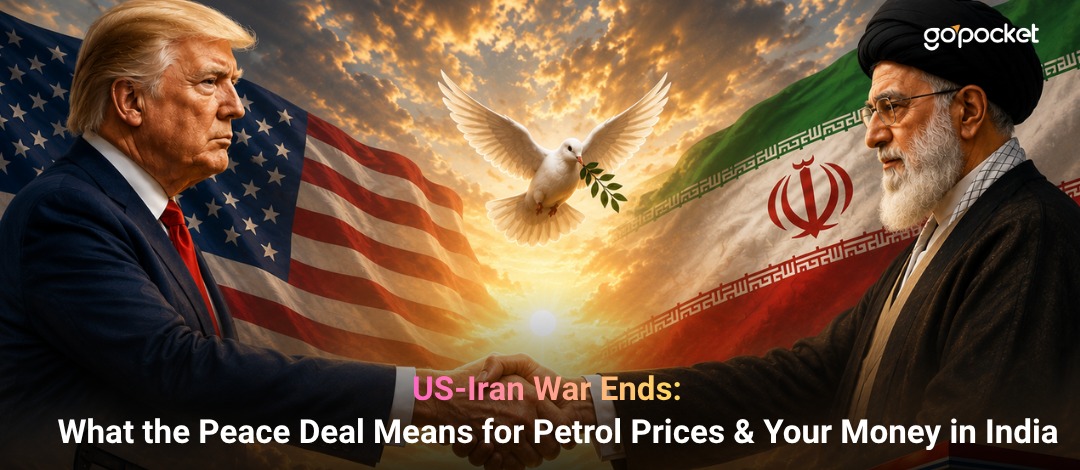


Rohan had a work trip to Dubai lined up. He'd sorted the tickets, packed his bag. Then one morning, his phone exploded with news alerts. Airstrikes. War. Iran.
By noon, his airline had messaged him to rebook. He cancelled. Then he opened his savings app and saw his investments had slipped overnight. Every news channel was using the same phrase he'd never heard before: Strait of Hormuz.
That was four months ago. Last week, both countries agreed to end the war. The official signing happens June 19.
If you're confused about what this means for your money — petrol, savings, gold — you're in the right place.
What Happened
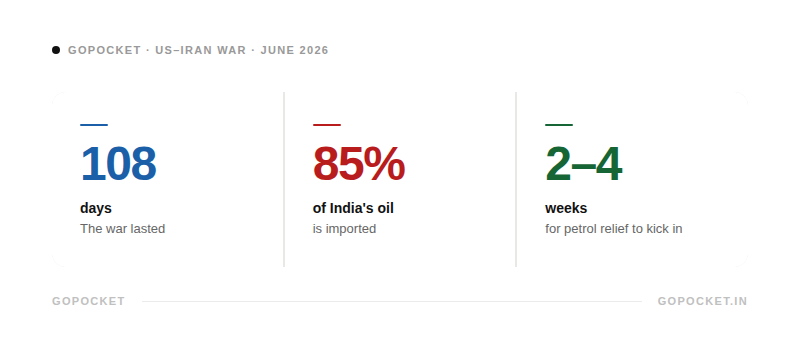
Oddly, the two countries were actually talking peace when the war began. The US and Iran had been in discussions for over a year — mostly about whether Iran was secretly building nuclear weapons. Then in late February, the US and Israel launched surprise air attacks. Iran's top leader was killed.
Iran fought back. Their drones hit Dubai's airport — it shut down for a bit. More importantly, they blocked a narrow strip of sea called the Strait of Hormuz.
Picture the Strait as a single-lane bridge that almost every oil tanker in the world must cross. When it shut, oil stopped moving. And when oil stops moving, petrol prices go up — everywhere, including India.
The attacks stopped on April 7. The peace deal was confirmed on June 14.
What the Peace Deal Says
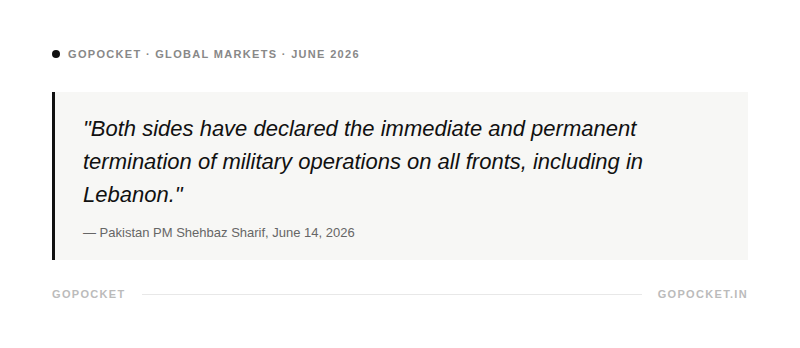
War ends
All fighting stops — including in Lebanon and Yemen.
Oil flows again
The blocked sea route is open. Tankers move. Prices should fall.
Inspectors back
International inspectors can check Iran's nuclear sites again.
Trade eases
Restrictions on Iran lift slowly — only if Iran keeps its word.
Money unfrozen
About ₹1 lakh crore of Iran's blocked money gets released in stages.
There's still a small argument: Iran wants its blocked money released first. The US says Iran needs to act first. They'll work it out before June 19.
Either way — the fighting is done.
What This Means for Your Wallet
Petrol and grocery bills. India buys most of its oil from other countries — shipped through that very sea route that just reopened. When it was blocked, petrol got expensive, delivery costs went up, and grocery prices followed. Now that it's open again, expect a slow drop over the next few weeks. Not overnight — but it's coming.
Stocks and mutual funds. Companies that use a lot of fuel — airlines, delivery firms, car manufacturers — took a hit during the conflict. Now that oil is getting cheaper, their costs drop. If you have money in a mutual fund, these companies bouncing back is good news for your returns.
Your monthly SIP. A SIP is simple: you put a fixed amount — maybe ₹1,000 or ₹5,000 — into a mutual fund every single month, no matter what's happening in the world. If you kept doing that during the war, here's the thing: you were buying more units when prices were low. That's actually how you build wealth. Please don't stop now.
Gold. People rush to buy gold when they're scared. So during the war, gold went up. Now that things are calmer, it may come down a bit. If more than 15 out of every 100 rupees you've invested is in gold, it might be time to spread it out a little.
Savings and fixed deposits. When petrol gets cheaper, everyday prices stop rising so fast. That gives India's central bank room to lower interest rates. Lower rates sound bad, but they actually make older fixed deposits and savings schemes more valuable. A quiet win, if you have money there.
One Thing Worth Remembering
No one predicted this war. Not economists, not analysts — nobody. It started while peace talks were already happening.
And yet, if you look back at every scary moment in the last 20 years — the 2008 crash, COVID, the 2020 market fall — the people who did nothing, who simply stayed invested, ended up better off than those who panicked and pulled out their money.
India's stock market has gone up after every single fall in its history. Every one. Timing that perfectly is impossible. Staying put is not.

If these past four months left you genuinely worried about your savings — not just mildly nervous, but actually losing sleep — that's a sign your investments may be carrying more risk than you're comfortable with. That's fixable. Just do it calmly, not in a rush.

If these past four months left you genuinely worried about your savings — not just mildly nervous, but actually losing sleep — that's a sign your investments may be carrying more risk than you're comfortable with. That's fixable. Just do it calmly, not in a rush.
• If your SIP kept running during all this — great. You bought at lower prices. Don't stop now.
• Gold might drop a bit. If it's more than 15% of your savings, consider spreading out.
• Every past market crash has reversed. The investors who stayed calm always won.
DISCLAIMER
Investments are subject to market risks. Please read all scheme-related documents carefully before investing. This content is for educational purposes only and does not constitute investment advice. GoPocket is a SEBI-registered intermediary.
Disclaimer
What's Trending
“Silver: The Hidden Gem of Investment You Can’t Ignore!”
September 26, 2025
Weekly Review of Indian Markets & Outlook Ahead (Feb 16–20)
February 20, 2026
NPS vs PPF: Which Is Better for Retirement?
June 30, 2026
Recent Blog


.jpeg)

Blog
Recent Blogs





Open your GoPocket Account within 5 minutes.
Have any queries?
Get support

Investing and trading is made simple, affordable and accessible for every Indian.



© Made with ❤️ in Coimbatore, India | Copyright © 2023 onwards, GoPocket.