


Zepto IPO 2026 vs Shiprocket IPO:
Which One Suits You?
Two apps you already use are going public. Here's what you'd actually be buying .
It's 11 PM. You're out of milk. You open Zepto, and ten minutes later the doorbell rings.
Same week, 9 AM in Jaipur. A woman selling sarees online packs 50 overnight orders, opens Shiprocket, prints 50 labels, and a courier collects them before lunch.
Ordinary Tuesdays. Both companies are now heading to the market.
The Zepto IPO 2026 and the Shiprocket IPO are the two most-watched new-age tech listings of the year. So the question isn't whether you like the app.
It's whether you understand what you'd own.
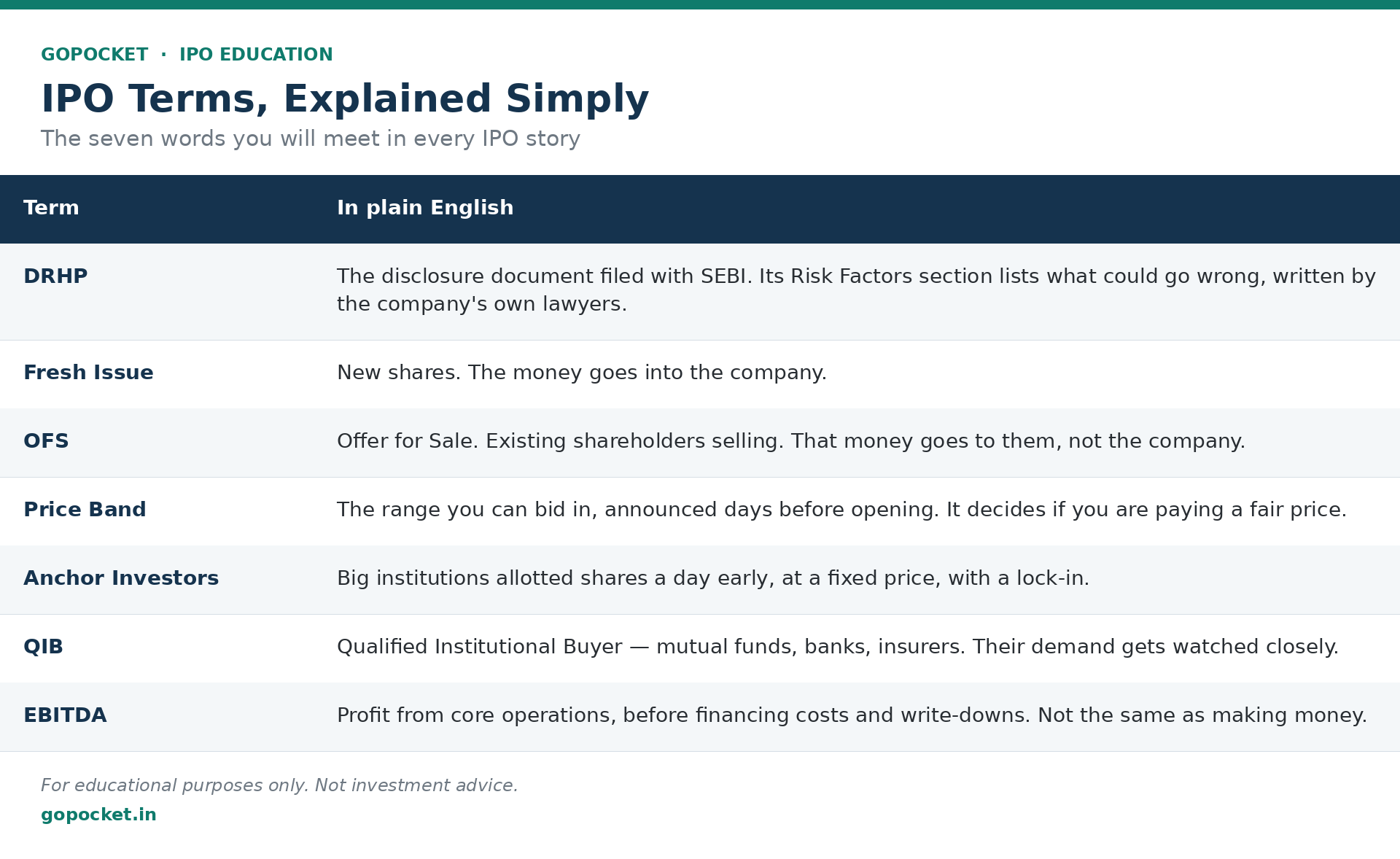
What do the IPO terms actually mean?
What is the Zepto IPO 2026?
Zepto has filed for a ₹8,010 crore fresh issue. SEBI cleared it in May 2026, and the subscription window is expected between July and September.
Quick backstory: Aadit Palicha and Kaivalya Vohra were at Stanford when COVID hit. They came home, watched their families struggle to get groceries delivered, and dropped out.
Four years on: 900+ dark stores, a gross sales run rate near $3 billion, a valuation around $7 billion. CalPERS is a backer.
What is a dark store?
A dark store is a small warehouse with no customers inside. Roughly kirana-shop sized, placed inside a residential pocket, stocked with the few thousand items that neighbourhood orders most. Staff pick items and hand them to a waiting rider.
The ten-minute delivery isn't riders going fast. It's the warehouse being 1.5 km away instead of 15.
Why is Zepto losing money if revenue is growing?
Revenue doubled to ₹22,623 crore in FY26.
Zepto also lost ₹5,905 crore in FY26. Losses widened even as revenue doubled.
Quick commerce is a land grab. Every dark store costs money to build and staff. Every new city burns cash before it earns any. Zepto is betting that at enough density, each store turns profitable.
Does that work? DoorDash took roughly nine years to reach profitability. Closer to home, Blinkit's unit economics have improved quarter after quarter. India's quick commerce market is projected to hit ₹4.1–6.1 trillion in five years.
One disclosure: Zepto's UDRHP notes an ongoing FEMA-related compliance matter involving the founders, with documents submitted to the ED. Read that section yourself.
What does Shiprocket do?
Shiprocket is a logistics platform that lets small online sellers ship through many courier partners from one dashboard. Founded in 2011, it's India's largest new-age e-commerce enablement platform by FY25 revenue, per Redseer.
You've probably used it without knowing. In the six months to September 2025, its merchants ran 97 million+ transactions serving 42 million+ customers.
The detail that matters: roughly 66% of deliveries go to tier II and tier III cities — where big logistics players deprioritise.
Back to the saree seller. Alone, she'd negotiate with a dozen couriers, handle returns, chase lost parcels, reconcile payments — while running her business.
She isn't buying software. She's buying a logistics department she could never afford to hire.
Financially, it's calmer: a ₹74 crore loss in FY25, and improving. Its issue is ₹2,342.35 crore — ₹1,100 crore fresh, ₹1,242.35 crore OFS. Note that mix. More than half is existing shareholders selling.
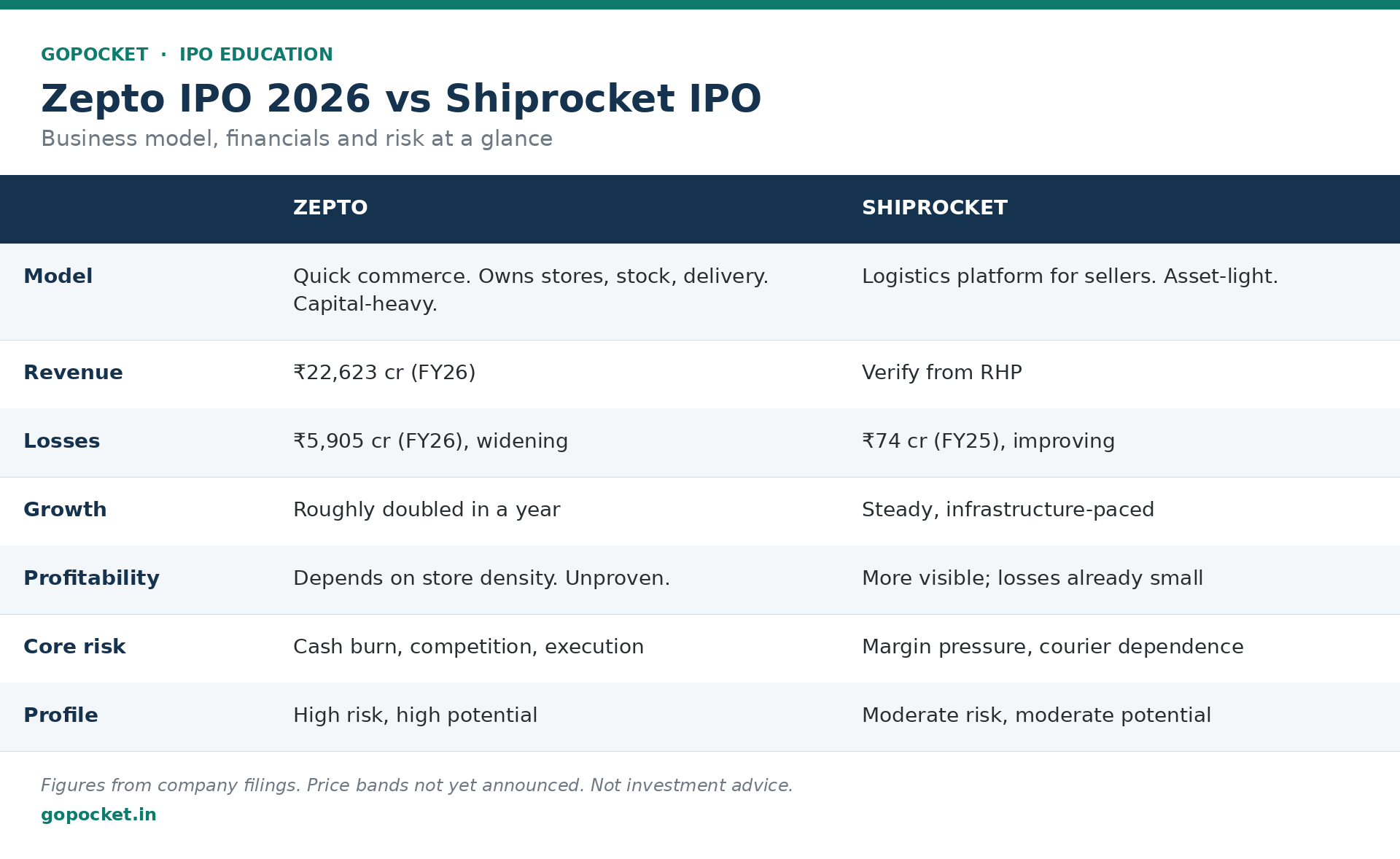
Zepto vs Shiprocket: how do they compare?
Why does the IPO price band matter so much?
A great company and a great investment are not the same thing.
Buy a flat in a genuinely good neighbourhood. The area improves, prices rise, everything you believed comes true. Pay three times the going rate, and you're still underwater a decade later.
The neighbourhood wasn't wrong. Your entry price was.
The price band decides how much of a company's future success you pay for today. Pay for five years of flawless execution, and you only profit if it delivers more.
Neither company has announced one yet. So the single most important number in this decision doesn't exist. Anyone giving you a verdict today is guessing.
What could go right?
Zepto. Store density hits the point where each location turns profitable. Quick commerce expands into higher-margin categories. Competition rationalises.
Shiprocket. Indian e-commerce pushes toward $800 billion by 2030, with tier II and III cities growing fastest — Shiprocket's strongest ground. Merchants adopt more services per account, and a small loss flips to profit.
What could go wrong?
Zepto. Scale takes longer than promised, and the company raises again at a lower valuation. Blinkit and Instamart keep discounting irrationally. Regulatory friction, or the disclosed FEMA matter.
Shiprocket. Couriers raise rates, or big platforms build rival tools in-house. Growth stays modest while the valuation assumes better.
Both. Sentiment turns against loss-making new-age tech, as it has before. Lock-ins expire, and supply hits the stock.
Which investor is each IPO for?
Zepto may suit someone with a diversified core portfolio, allocating a small slice to high-risk growth, with a real 3–5 year horizon and the stomach for a 40% drawdown.
Shiprocket may suit someone who prefers infrastructure over consumer plays and wants e-commerce exposure without picking a winning retailer.
Neither suits anyone borrowing to apply, treating an IPO as a lottery, or investing without reading a page of the DRHP.
What should you check before applying?
1. Where does the money go? Fresh issue funds the business. OFS funds an exit.
2. What does the company say could go wrong? Read the Risk Factors section. Not a summary.
3. What am I paying versus a listed peer? Eternal for Zepto; listed logistics-tech for Shiprocket.
4. When does it plan to make money? Vague answers are answers.
5. Would I hold it three years after a 30% listing-day fall? If not, you're trading, not investing.
Then watch the price band, the anchor allotment the day before opening, and day-one QIB demand.
The bottom line
Zepto chose speed. Shiprocket chose steadiness.
Zepto made ten-minute delivery ordinary. Shiprocket let a weaver in Varanasi ship to Vancouver without owning a truck.
That's not in question. Whether the price reflects it fairly is — and only the price band answers that.
So do the boring thing. Read the DRHP, understand both businesses, decide what you'd call a fair price. Then wait for the number.
Track the Zepto IPO 2026, the Shiprocket IPO and every other listing in India's pipeline on GoPocket — so you have the information before subscription opens, not during it.
Which of these two would you actually apply for? Tell us why.
Investments are subject to market risk. Please read all scheme-related documents carefully before investing. This article is for educational purposes only and does not constitute investment advice. IPO details are subject to change until the Red Herring Prospectus is filed. GoPocket is a SEBI-registered intermediary.
Disclaimer
What's Trending
India's Cash Market: From Record Low to Record High
April 28, 2026
Recent Blog


.jpeg)

Blog
Recent Blogs





Open your GoPocket Account within 5 minutes.
Have any queries?
Get support

Investing and trading is made simple, affordable and accessible for every Indian.



© Made with ❤️ in Coimbatore, India | Copyright © 2023 onwards, GoPocket.