


Meet Arjun. He is 31. He is a software engineer in Bengaluru. His company just told him there is a six month UK posting coming, and his name is on the shortlist. He also holds a small SIP, a few Tata Motors shares, and a neighbour in Coimbatore who exports textiles.
On July 15, 2026, just three weeks away, all of that quietly changes. India and the UK are switching on their trade deal. It is officially called CETA, the Comprehensive Economic and Trade Agreement. It was signed a year ago. The real question is simple: which part of it touches your money?
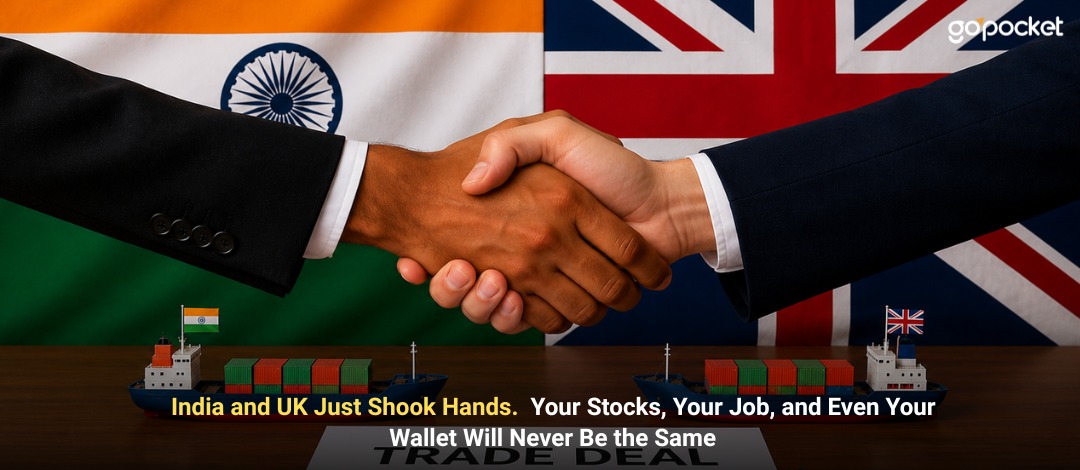
The Deal , In one picture
Think of two neighbours trading goods over a wall. Right now, they charge each other a fee every time something crosses. They agree to drop most of those fees. More goods move. More business happens. More jobs appear on both sides. That is a free trade agreement.
CETA cuts import duties on almost 99 percent of Indian exports to the UK. That includes textiles, leather, marine products, tea, spices, engineering goods and chemicals. In return, UK goods get easier entry into India too, especially cars and Scotch whisky.
Trade between the two countries is close to USD 56 billion a year today. The goal is to double that to USD 112 billion by 2030. That would make the UK one of India's top three trading partners. This is not a ceremonial signing. It is a real structural shift, and it starts in three weeks.
RIPPLE ONE: Arjun's Posting just got cheaper
Right now, Indian workers on UK assignments pay social security in both countries at once. This is called double contribution, and it adds real cost to every posting. India and the UK are fixing this on the same day, July 15. Workers will now pay in one country, not two. The exemption window also grows from three years to five.
For Arjun's employer, that is a direct saving. For Infosys, TCS, Wipro, HCL, and smaller IT firms, it lowers the cost of sending people to the UK. If you hold IT stocks or IT mutual funds, watch for this in management commentary over the next few quarters. It will not be a headline. It will be one line in a results call.
RIPPLE TWO: The Export door swings open
Arjun's neighbour in Coimbatore has waited years for this. Exporters in Tirupur, Surat and Ludhiana have long faced higher duties than rivals from countries with existing UK deals. From July 15, that changes. Textiles that faced duties up to 12 percent now enter the UK at zero. Leather goods drop from 16 percent. Marine products, gems, engineering goods and toys get similar treatment, opening up access to 67 million UK consumers.
This is not a reason to buy every textile stock this week. The exporters who already sell to the UK, and can scale fast, will gain first. Others will take longer. What is worth watching: export order books and UK revenue in the next two or three quarterly results.
RIPPLE THREE: Cars, EVs, and that Bottle Of Scotch
Tata Motors is touched from two sides. On imports, India will let in more UK cars over the next 15 years, with duties falling from 110 percent to 10 percent under a quota. That adds competition for premium and luxury carmakers here. But mass market EVs are protected. Tata's Nexon EV, along with electric models from Mahindra and Maruti, are shielded from this.
On exports, the upside comes later. Starting in year six, Indian electric, hybrid and hydrogen vehicles get duty free access to the UK. For Tata, which already has a global EV presence through Jaguar Land Rover, this plays out over years, not quarters.
The other big talking point: Scotch whisky. Import duty in India drops from 150 percent to 75 percent immediately, with more cuts to follow. A bottle that costs Rs. 3,000 in Scotland has been selling for Rs. 12,000 to 15,000 here. As prices fall, that puts pressure on premium Indian brands like United Spirits, Radico Khaitan and Allied Blenders. The shift will be slow, and it depends on how well these companies hold their pricing and brand loyalty.

What this means for your Portfolio?
A trade deal is an opportunity, not a guarantee. CETA gives Indian exporters a better starting point in the UK. It does not win the deals for them. A textile firm still has to land the buyer. An IT company still has to price the contract right.
So do not chase every CETA linked stock this month. Instead, check which companies in your own portfolio actually have UK exposure. Then watch what their management says in the July and October results. That is where the real signals will show up first.
One more thing worth knowing: this is India's first major trade deal with a G7 economy. It is a sign of where India stands in the world right now, and that matters for every long term investor.
The handshake has happened. The ripples are moving. GoPocket will keep tracking where they land, in plain language, every day.
Disclaimer
Stock market investments are subject to market risk. Please read all related documents carefully before investing. This blog is for educational purposes only and does not constitute investment advice. GoPocket is a SEBI-registered intermediary.
Disclaimer
What's Trending
NSE Commodities on GoPocket: What It Means & Why It Matters
February 13, 2026
Oil Crisis 2026: Why Your LPG Bill Just Went Up ₹60
March 27, 2026
The Investing Strategy That Quietly Beats Most Fund Managers
August 18, 2026
What Changed in Your Mutual Funds? SEBI Update
March 7, 2026
Recent Blog


.jpeg)

Blog
Recent Blogs





Open your GoPocket Account within 5 minutes.
Have any queries?
Get support

Investing and trading is made simple, affordable and accessible for every Indian.



© Made with ❤️ in Coimbatore, India | Copyright © 2023 onwards, GoPocket.